What is gig economy?
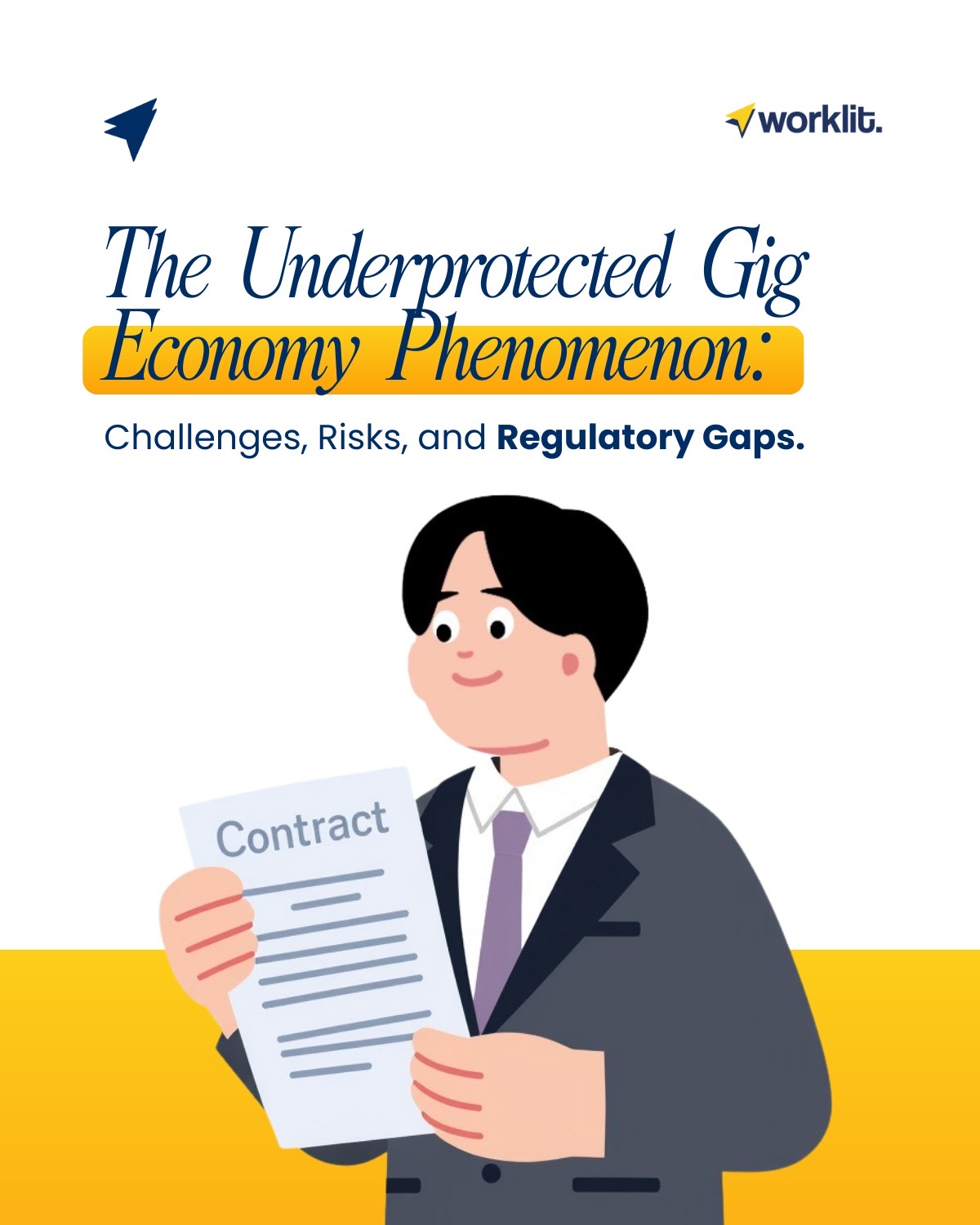
According to the BBC, the gig economy is a labor market that is synonymous with short-term contract employees or freelancers. Gig economy is quite popular in this economy because of the terrible job market right now, generations after generations like Gen Zs and Millenial start contemplating on getting a side job for saving their financial needs.
Although it’s flexible and pretty easy on making money online like being a freelancer, content creator, even doing a delivery service as an informal workers. Doing many sidejobs and entering the world of gigs it’s a challenge. Because being in a short-term contract like a freelancer is considered as “partner-status” not an employee.
According to BPS data from August 2024, 57.95 percent, or approximately 83.8 million workers in Indonesia, are classified as informal workers, including gig workers. Other challenges gig workers are facing is they have no income guarantee because of the non employees status.
Because of that they have no BPJS Employment including employment and independent with no leave, severance pay, or layoff protection.
Then, a regulatory gap has been created…
Considering UU Ketenagakerjaan or The Employment Law is not yet specific regulating gig jobs and as a result gig workers are in a legal area in the world of work here in Indonesia. Minister of Manpower (Menaker) Yassierli agreed to propose that gig workers be included as part of the discussion on revising the Law.
This makes gig economy type of job is a high risk work. With no law regulating their job, gig workers will face so many challenges and risks in the long run like economic instability, health and safety issues, and inequality in employment protections
It’s time to discuss the gig economy not just as a matter of flexibility, but also fairness.