
It feels like many brands today think slapping a trending audio on a video or listing product features is enough to win customers. But modern audiences can easily spot a hard sell. They don’t want a robotic corporate pitch; they want the real, unfiltered story behind the brand. Marketers today face a tough challenge: shrinking attention spans and an ocean of endless content. If people scroll past thousands of posts a day, why would they stop for a boring promotional banner? This is where storytelling comes in. Here is why it is the ultimate marketing tool: 1. Stories Stick Better in Our Brains Throwing random facts and data at your audience won’t work. According to cognitive psychologist Jerome Bruner, a fact is 22 times more likely to be remembered if it is wrapped in a story. Stories make information easy to digest and hard to forget. 2. People Buy Feelings, Not Just Features Audiences today value authenticity. They don’t just buy a service; they buy the “life lore” and the journey behind it. A good data-driven strategy tells you who to target, but the story is what actually makes them stay and build a connection. 3. Corporate Perfection is Boring People resonate much more with a raw, “daily draft” vibe. They want to see the real struggles, the behind the scenes process, and the humans behind the logo instead of a heavily edited, fake-looking commercial. At its core, marketing today comes down to one simple truth: Attention is not the same as connection. Storytelling isn’t just about making things sound pretty. It is how you deliver your real value with genuine empathy. If a brand is struggling to win over its audience, maybe they don’t need to blame the algorithm. Maybe they just need to tell a better story.
Gen Z: The Future Generation with High Anxiety and Low Resilience?
Gen Z is considered the future generation of the workforce. According to The Wellbeing Project, Gen Z are projected to make up 1 in 3 workers globally by 2025. However, as the next generation to lead, Gen Z is often seen as a group marked by high levels of anxiety and low resilience. What Affects Gen Z’s Low Resilience? There are valid reasons why Gen Z tends to have lower resilience than previous generations. Many of them spent their formative years online due to the pandemic, which meant limited exposure to real-life social interactions. As a result, their interpersonal skills were not developed optimally. Many of them feel anxious or even fearful when interacting with unfamiliar people. Some Gen Z individuals even avoid meeting new people altogether. This explains why many get nervous during conversations or interviews despite the fact that these skills are crucial for job interviews and teamwork. Challenges Faced by Gen Z Gen Z’s low resilience in the workplace isn’t simply about being “mentally weak”, a stereotype often unfairly attached to them. Instead, it’s the result of a mix of structural and personal challenges: lack of real-world experience and an overwhelming fear of failure. A 2024 report by the American Psychological Association revealed that over 50% of Gen Z feel uncomfortable in social settings and around 40% experience high anxiety when they have to perform or speak in front of others. A 2023 LinkedIn Global Survey also highlighted that the largest skill gap among job seekers aged 18–24 is in communication and interpersonal skills. The data above highlights the significant challenges Gen Z faces in navigating the workforce. However, this doesn’t mean they lack the ability to stand on their own and thrive with the potential they possess. The Hidden Strengths of Gen Z Gen Z may be different from previous generations, but it is exactly what makes them a unique edge: they learn fast in digital environments and they are more aware of mental health issues than any generation before them. When given the space to grow, their confidence can flourish. And when they are trained to take risks and embrace failure, they don’t just survive, they shine. In addition to technical training, Gen Z also needs to build strong communication skills, the courage to try new things, and above all, self-confidence. Because the future of the workforce doesn’t only demand intelligence, it demands emotional strength and belief in themself. So, to every Gen Z reading this: don’t be afraid to start showing up with confidence. Your potential is there and you just need to let it shine for now.
Why Does Gen Z Have a Different Mentality When It Comes to Job Hunting?
Imagine an interview room filled not just with the recruiter and the candidate, but also with the candidate’s parents present. Strange? Maybe for older generations. But in today’s world, that scenario is becoming less shocking. According to a survey cited by the New York State Society of CPAs, among 1,428 Gen Z respondents currently job hunting, 26% admitted to bringing their parents to job interviews, and 70% openly said they asked their parents for help in finding a job. So, what makes Gen Z do that? According to The Wellbeing Project, Gen Z is projected to make up 1 in 3 workers worldwide by 2025. That means for the foreseeable future, Gen Z is the face of offices, shops, hospitals, and many other sectors. As the successors to older generations, Gen Z brings with them a different level of confidence. In fact, Gen Z’s confidence is 14% lower than that of previous generations when entering the workforce. This isn’t just a statistic, it directly affects their resilience and determination in navigating the job search process. The Anxiety and Uncertainty Gen Z Faces A 2024 report by Deloitte Global revealed that 46% of Gen Z feel anxious and stressed almost all the time. This isn’t surprising when we consider the world they’ve grown up in: a global pandemic, climate crisis, social media pressures, and ongoing economic uncertainty. As a result, many Gen Z individuals experience deep anxiety, especially in unpredictable situations like job hunting. What is already a stressful process becomes even more intimidating for Gen Z. For some, even just attending a job interview can trigger intense anxiety due to an overwhelming fear of failure. That’s why the phenomenon of bringing parents along to job interviews starts to make sense because it helps them feel more at ease. But here’s the problem: parents won’t always be there. While emotional support from parents during the job search is understandable, actually bringing them to an interview is another matter. Recruiters tend to see this as a “red flag” since the need to feel the presence of Mom or Dad “says a lot” about a candidate. The Need for Gen Z to Build Confidence That’s why it’s so important for Gen Z to start practicing confidence, especially for key challenges like job interviews. Interviews can be incredibly intimidating, especially for those not used to speaking in front of others. Many end up nervous and unable to show their true potential in front of recruiters, even when they have valuable skills to offer. The good news? Interview anxiety can be managed through practice. Because, as the saying goes, practice makes perfect. By preparing and practicing regularly, Gen Z can learn to manage their anxiety, speak more confidently, and make a stronger impression during interviews without needing a parental safety net.

Is Skill Gap the Main Reason Why Most Indonesian Workers End Up in the Informal Sector?
When the formal sector can no longer absorb Indonesia’s ever-growing labor force, the informal sector becomes the fallback option. Ironically, this shift is largely driven by the fact that many Indonesian workers are simply not equipped to compete in today’s modern job market. According to Indonesia’s Central Bureau of Statistics (BPS), out of 145.77 million employed individuals, 86.58 million people or around 59.40% of them worked in the informal sector as of February 2025. This means that more than half of Indonesia’s workforce does not hold decent, formal jobs. As a result, informal workers are often excluded from basic rights such as social security, formal contracts, or decent wages. Even more concerning is the fact that the number of informal workers continues to rise year after year. BPS recorded an increase of 2.45 million informal workers in February 2025 compared to the same month in 2024. In other words, instead of decreasing, informal employment is growing. Why is this happening? Reasons Why So Many Indonesians End Up in the Informal Sector 1. Mismatch Between Education, Skills, and Industry Needs An individual’s education and skills play a vital role in determining whether they can secure a decent job. But many job seekers in Indonesia possess skills that don’t align with what industries actually require. As a result, many are unable to enter the formal job market and instead take on any work they can find—like driving for ride-hailing services or freelancing without legal protection. Note: According to a 2024 World Bank report, only 19% of young Indonesian workers possess basic digital skills despite such skills being a standard requirement for most formal jobs today. 2. Informal Work Is More Accessible Informal jobs often don’t require higher education degrees or specialized training. For many, they’re the most realistic and sometimes the only option to survive. These jobs are easier to find and quicker to start, even if they lack stability and long-term growth. What Can Informal Workers Do to Transition Into the Formal Sector? The challenges faced by job seekers and the ready-to-work population in Indonesia all point toward one crucial factor: Indonesian workers need to improve their knowledge, skills, and overall quality to break into the formal sector. In this fast-moving and ever-changing era, industry demands are shifting rapidly. A university degree alone is no longer enough. Indonesian workers need relevant, up-to-date skills, the ability to adapt, and the motivation to keep learning. That’s why, if you want to escape the trap of unemployment and informal work, don’t just wait for government support in the form of infrastructure or capital. The first step must come from within. If you’re one of those individuals, start to invest in your skills and build your personal value right now.
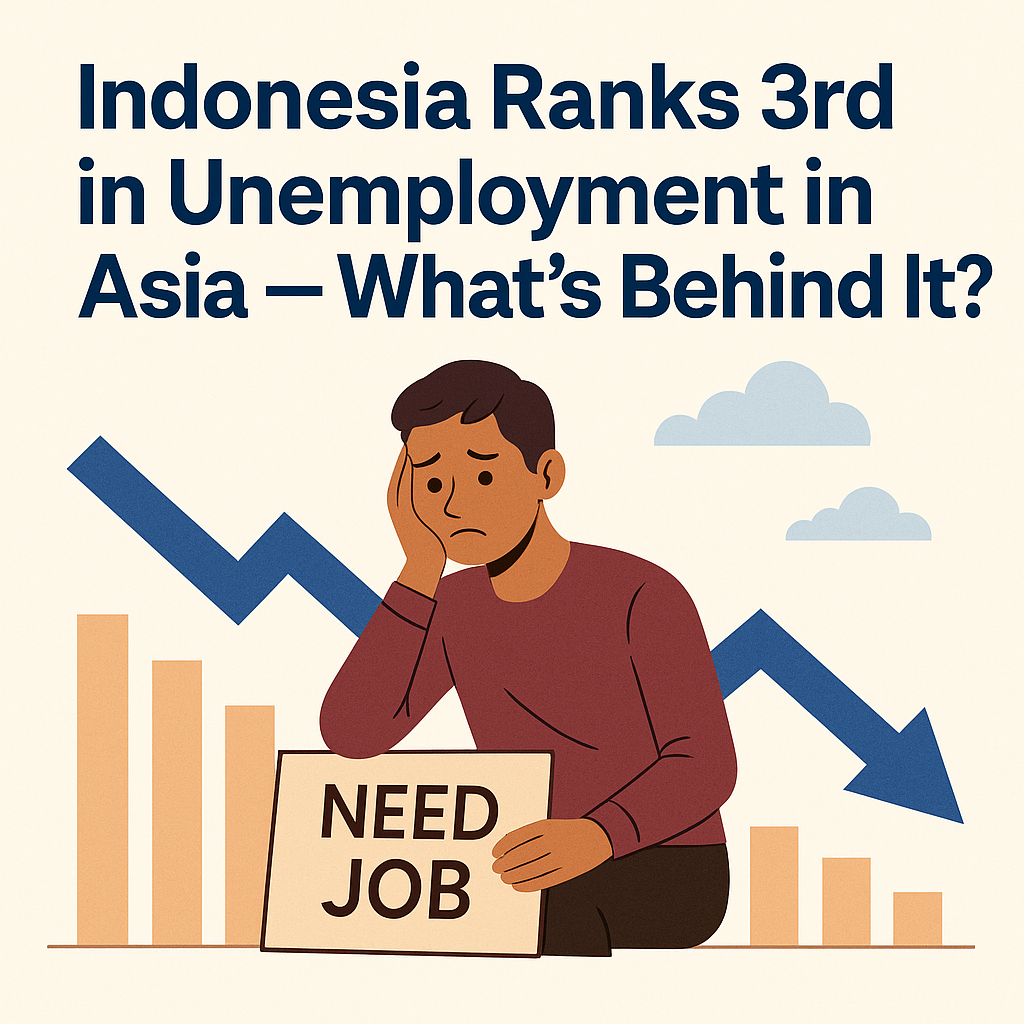
Indonesia Ranks 3rd in Unemployment in Asia What’s Behind It?
Indonesia has long been projected to benefit from a demographic bonus. Ironically, the country is instead expected to continue grappling with a persistent—and even worsening—problem: high unemployment. According to the 2025 report by the International Monetary Fund (IMF), Indonesia’s unemployment rate is projected to reach 5%. This places Indonesia as the country with the third-highest unemployment rate in Asia, after Pakistan (8%) and China (5.1%). Yes, Indonesia ranks third in unemployment in Asia. This isn’t just a statistic on paper. Behind these numbers are millions of individuals who have lost hope of securing decent employment. This “achievement” also serves as a warning sign: our formal job market still struggles to absorb the available workforce effectively. Why Can’t Indonesia’s Formal Sector Absorb Enough Workers? According to the Indonesian Employers Association (Apindo), there are at least three key factors why Indonesia’s labor market fails to absorb the available workforce optimally: 1. Shift of Investment to Capital-Intensive Sectors Many investors entering Indonesia today are more inclined to put their money into capital-intensive industries like automation and high-tech manufacturing. This is such an irony because the sectors that absorb the most labor are labor-intensive industries such as textiles and agriculture. This misalignment results in limited job creation despite significant investment value. 2. Mismatch in EducationApindo notes that only 12.66% of Indonesia’s workforce are university graduates. As a result, many companies struggle to find candidates with educational backgrounds that match the requirements of the roles they’re hiring for. 3. The Skill GapMany Indonesians are ready to work, but lack the skills required by today’s industries. Their skill sets often don’t align with the rapid technological advancements and fast-changing business landscape. This creates a wide gap between labor supply and labor demand. In a tech-driven era like today, industry demands are evolving rapidly. Individuals who fail to keep up with these changes and neglect to invest in their own growth will fall further and further behind. And when that happens, finding decent work becomes an increasingly difficult challenge.

